
Your signature style might be holding you back.
Every designer dreams of developing a recognizable style. But what happens when the thing that makes you successful becomes the thing that limits you?

There's something incredibly satisfying about seeing a piece of creative work and immediately knowing who made it.
You recognize the colors. The typography. The illustration style. The tiny details that make it unmistakably theirs.
As designers, that's often what we're working toward. We want our work to stand out. We want people to recognize it. And, ideally, we want clients to come knocking because they love what we do.
But there's a question we don't ask nearly enough.
What happens when people only want you to do that one thing?
When your style becomes your reputation
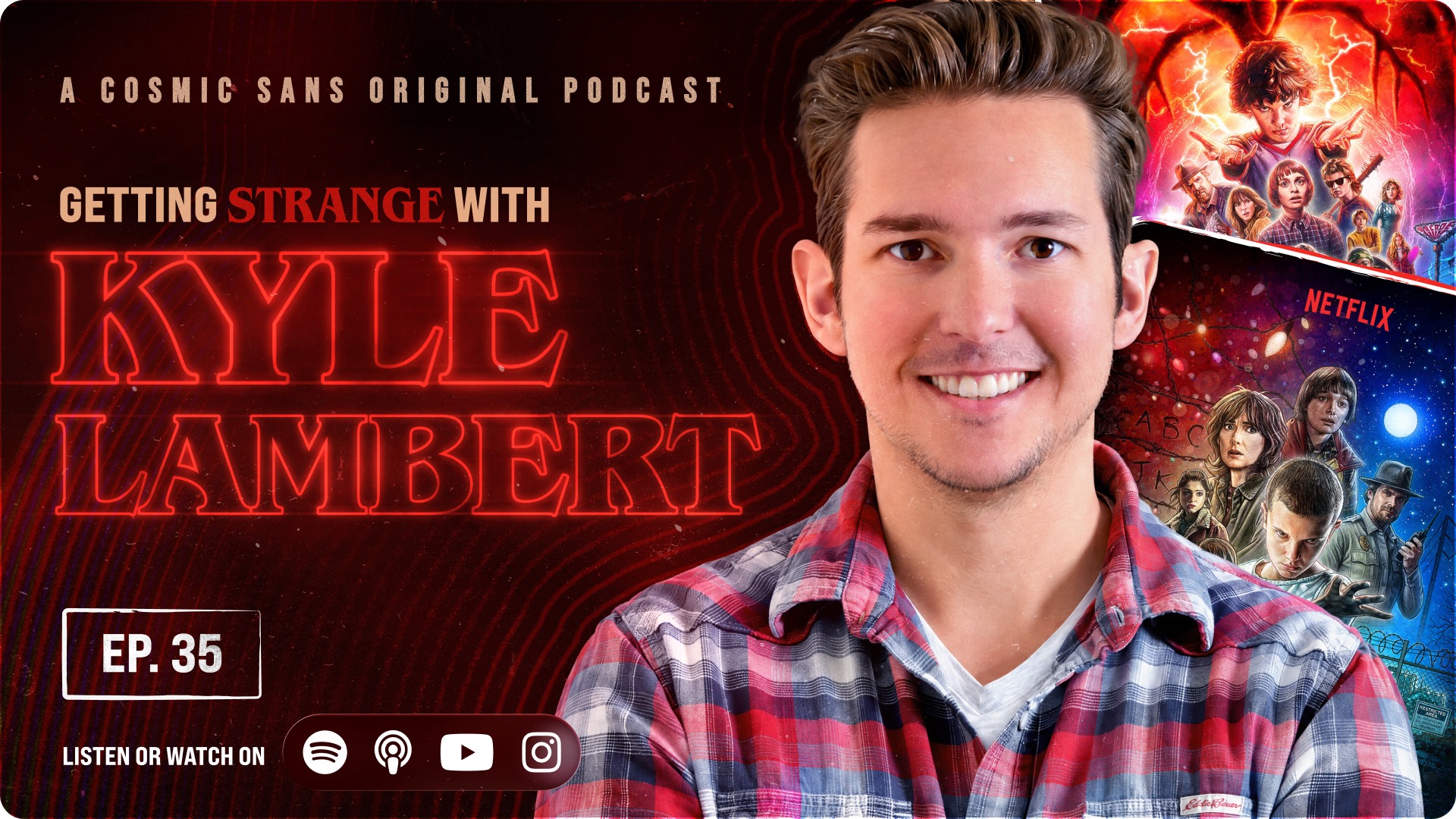
I recently sat down with my longtime friend Kyle Lambert, the artist behind the iconic Stranger Things posters.
If you've seen his work, you know exactly what I'm talking about. Rich colors, dramatic lighting, beautifully illustrated characters, and that unmistakable nostalgia of classic 1980s movie posters.
It's a style that has become synonymous with one of the biggest television franchises of the past decade.
But here's what makes Kyle's story interesting.
That wasn't always his style.
Before Stranger Things, Kyle was creating incredibly detailed, photorealistic portraits. His viral painting of Morgan Freeman, created on an iPad using nothing but his finger, remains one of the most impressive examples of digital painting I've seen.
When he eventually transitioned into movie posters, his work evolved. He drew inspiration from legendary illustrators like Drew Struzan and John Alvin, combining their influences with his own techniques, preferences, and creative instincts.
Over time, something happened.
What started as a combination of influences became something distinctly his own.
And clients began asking for it.
There's a certain irony in that. You spend years developing your abilities, experimenting with techniques, and finding your creative voice. Then, when the world finally recognizes it, people start expecting you to stay exactly where you are.
The success trap
Imagine spending years trying to become known for your work, only to discover that being known for your work makes it harder to do something different.
That's the trap.
Clients aren't necessarily interested in everything you're capable of. They're interested in what they've already seen you do successfully.
And, to be fair, can you blame them?
If someone hires Kyle Lambert, there's a good chance they're expecting something that resembles the incredible posters he's become famous for. They're not necessarily looking for an experimental abstract painting or something completely unexpected.
They're hiring him because they know what they're going to get.
The same thing happens across the creative industry.
Become known for bold typography? Expect more bold typography.
Build a reputation for minimalist branding? Guess what your next client probably wants.
Create a successful illustration style? Congratulations. You might be doing variations of it for the next decade.
The better you become at something, the easier it is for everyone else to forget you're capable of anything else.
And sometimes, we reinforce that perception ourselves.
You're allowed to evolve
One of my favorite parts of Kyle's explanation was how he described his style as a recipe.
Different projects call for different ingredients.
For something dark and atmospheric like Stranger Things, he might emphasize rough textures, dramatic shadows, and intense lighting.
For something brighter and more adventurous, like his work on One Piece, he can adjust that recipe. More color, softer lighting, a different overall energy.
It's still recognizably his work, but it isn't identical.
And that's an important distinction.
Having a signature style doesn't mean every project needs to look the same.
Your influences change. Your interests change. Your skills improve. You discover new techniques, new tools, and new ways of solving problems.
The work you create today shouldn't necessarily look like the work you were creating five years ago.
In fact, I'd be a little concerned if it did.
We're constantly encouraging designers to experiment, explore, and push themselves creatively. Yet the moment someone becomes successful with a particular aesthetic, we almost expect them to preserve it forever.
That's a strange expectation to put on an industry built around creativity.
Stop waiting for permission to try something new
Kyle shared a piece of advice during our conversation that I think every creative professional should hear.
If there's a type of work you want to be hired for, put that type of work in your portfolio.
Even if nobody has hired you to do it yet.
Especially if nobody has hired you to do it yet.
It sounds obvious, but think about how many designers build portfolios exclusively around work they've already been paid to create.
Then they wonder why they keep attracting the same kinds of projects.
Your portfolio isn't just a record of your past.
It's an advertisement for your future.
If you're a logo designer who wants to explore illustration, start illustrating.
If you're an illustrator who wants to work in packaging design, create a packaging project.
If you've spent years developing a particular aesthetic but desperately want to try something different, make something different.
It doesn't need to be commissioned. It doesn't need to make money. It doesn't even need to be particularly good the first time.
It just needs to exist.
Because clients can't hire you for something they don't know you can do.
And you shouldn't have to wait for someone to give you permission to grow.
Recognition shouldn't mean repetition
I want to be clear about something.
There's absolutely nothing wrong with having a signature style.
Some of the most influential designers and artists in history have built their careers around a recognizable visual identity. It's part of what makes their work special.
And Kyle certainly isn't suggesting that his success has become a burden. Quite the opposite. He's proud of what he's created, and his enthusiasm for the work is obvious.
But his career highlights an interesting challenge that many creatives eventually face.
How do you maintain the qualities that make your work recognizable while continuing to grow?
How do you satisfy clients who love your previous projects without simply repeating yourself?
And how do you avoid becoming so comfortable with what works that you stop exploring what might work next?
I don't think there's one perfect answer.
But I do think it starts with recognizing that your style should be something you develop, not something you're trapped inside.
The best creative careers aren't necessarily defined by doing one thing exceptionally well forever.
Sometimes they're defined by having the courage to become something different.
Even when the world already loves what you're doing.
From the page to the podcast
This article was inspired by my conversation with Kyle Lambert on the Cosmic Sans Podcast, where we explored his journey from early digital paintings to the iconic Stranger Things posters, his creative process, and how his artistic style has evolved over the years.
Watch the full conversation with Kyle Lambert on Cosmic Sans.
Kyle Lambert · 1:33:45