
Are designers
afraid to
stand out?
In a world overflowing with inspiration, why is so much design starting to look the same?

Open Instagram, Behance, or Pinterest, and you'll find an endless stream of beautiful creative work.
Perfectly arranged typography. Gorgeous color palettes. Immaculate mockups. The kind of work that makes you question every design decision you've ever made.
But scroll long enough, and something strange starts to happen.
Everything begins to look a little… familiar.
The same typography treatments. The same trendy gradients. The same layouts, textures, and aesthetics, repackaged with slightly different colors and messaging.
Don't get me wrong. A lot of this work is genuinely impressive. But sometimes I find myself wondering:
Are we becoming better designers, or just better at recreating what we've already seen?
It's a question that came up during a recent episode of the Cosmic Sans Podcast with editorial designer Kieron Anthony Lewis, and his perspective really stuck with me.
What if the problem isn't a lack of creativity?
What if we're simply afraid to stand out?
The Comfort of Creating Something Familiar
During our conversation, Kieron and I started discussing originality and the challenge of developing a recognizable creative identity.
I mentioned how much I enjoy discovering designers who are doing something genuinely different. Not necessarily something technically groundbreaking, but work that makes me stop scrolling because it feels fresh.
Kieron offered an interesting explanation for why we don't see more of it.
"I think there's a fear of wanting to stand out."
Think about that for a second.
When you're working on a new project, it's incredibly easy to open Pinterest, find a few successful examples, and start building something similar.
After all, those designs already work. They've been shared, liked, celebrated, and validated by thousands of people.
Following that formula feels safe.
And safety is comfortable.
As Kieron explained, when designers replicate something that's already proven successful, there's a sense that they can't really fail.
But there's a catch.
When everyone follows the same formula, being different becomes the exception rather than the expectation.
Inspiration Isn't the Enemy
Before anyone starts aggressively closing their Pinterest tabs, I should clarify something.
I'm a huge believer in creative inspiration.
I've spent countless hours browsing Behance, collecting references, studying typography, and admiring the incredible work other designers are putting into the world.
And I'm certainly not suggesting every project needs to reinvent graphic design.
Trends exist for a reason. Design principles exist for a reason. And sometimes a clean, familiar approach is exactly what a project needs.
There's absolutely nothing wrong with studying successful work or borrowing inspiration from the things we love.
The distinction, at least for me, is what happens after we find that inspiration.
Are we studying why something works, or simply recreating how it looks?
Are we taking an idea somewhere new, or stopping at the first version that feels familiar?
Kieron made a point about putting your own stamp on the things that inspire you. Bringing your own experiences, interests, and perspective into the work.
Because while hundreds of designers might use the same software, fonts, or techniques, none of them have lived exactly the same life.
That's where things get interesting.
The Fear of Getting It Wrong
There's another side to this conversation that I think deserves attention.
Putting something original into the world can be terrifying.
Especially when you know it's going to be judged.
You might spend hours, days, or even weeks working on something you're incredibly proud of, only for someone on the internet to declare it terrible in approximately four seconds.
Welcome to being a creative on social media.
During the podcast, I shared how much I used to struggle with negative feedback.
Early in my career, even relatively minor criticism could bother me for the rest of the day. I'd become defensive about work I cared about, sometimes even when the criticism was directed at a product rather than something I'd personally designed.
Over time, I've become much more comfortable with the idea that not everyone is going to like everything.
And that's perfectly fine.
There's a difference between thoughtful criticism that helps us grow and someone leaving a nasty comment because they have nothing better to do.
The trick is learning which one deserves your attention.
Kieron raised a similar point: when you share something that reflects your own creative perspective, some people aren't going to connect with it.
But others will.
And those people might become your biggest supporters.
You don't need everyone to love your work. You need to give the right people a reason to care about it.
Your Creative Identity Isn't a Trend
One thing I've noticed over the years is how quickly designers can become consumed by whatever aesthetic happens to be popular.
One month it's minimalism. The next it's maximalism. Then everything needs grain, oversized typography, and a slightly distressed texture.
And sure, experimenting with trends can be a lot of fun.
But there's a difference between exploring a style because you're excited about it and feeling obligated to use it because everyone else is.
Some of the most interesting creatives I've encountered aren't necessarily following trends.
They're following their curiosity.
They're creating work inspired by their childhood interests, cultural backgrounds, favorite music, unusual hobbies, and experiences that have shaped who they are.
The result isn't always perfectly polished.
It isn't always commercially appealing.
And it definitely isn't always going to perform well on Instagram.
But it feels like theirs.
That kind of authenticity is difficult to manufacture.
Maybe It's Time to Get a Little Uncomfortable
So, are designers actually afraid to stand out?
I don't think there's a universal answer.
Sometimes we're constrained by clients, deadlines, budgets, or brand guidelines. Sometimes we're still learning. And sometimes we simply like the same visual trends as everyone else.
But I do think there's something worth examining in our instinct to play it safe.
The next time you're designing something, consider asking yourself a few questions:
- Am I making this decision because it's right for the project, or because I've seen someone else do it?
- What would I try if I wasn't worried about how people might react?
- Is there something from my own experiences or interests that could make this feel more personal?
- Have I explored enough possibilities, or did I settle on the first thing that looked good?
You don't have to throw out the brief, ignore every design principle, and create something completely unrecognizable.
Sometimes originality is simply making one unexpected decision.
Trying a different approach.
Questioning an assumption.
Being willing to create something that doesn't immediately look like everything else in your feed.
Because the work that gets remembered isn't always the work that fits in.
And perhaps the bigger risk isn't creating something people might dislike.
It's creating something nobody remembers.
From the page to the podcast
Keep the conversation going
This article was inspired by my conversation with Kieron Anthony Lewis on the Cosmic Sans Podcast, where we explored editorial design, creative identity, finding your voice, and the importance of standing out in an increasingly crowded industry.
Listen to the full conversation to hear Kieron's perspective and the experiences that have shaped his creative journey.
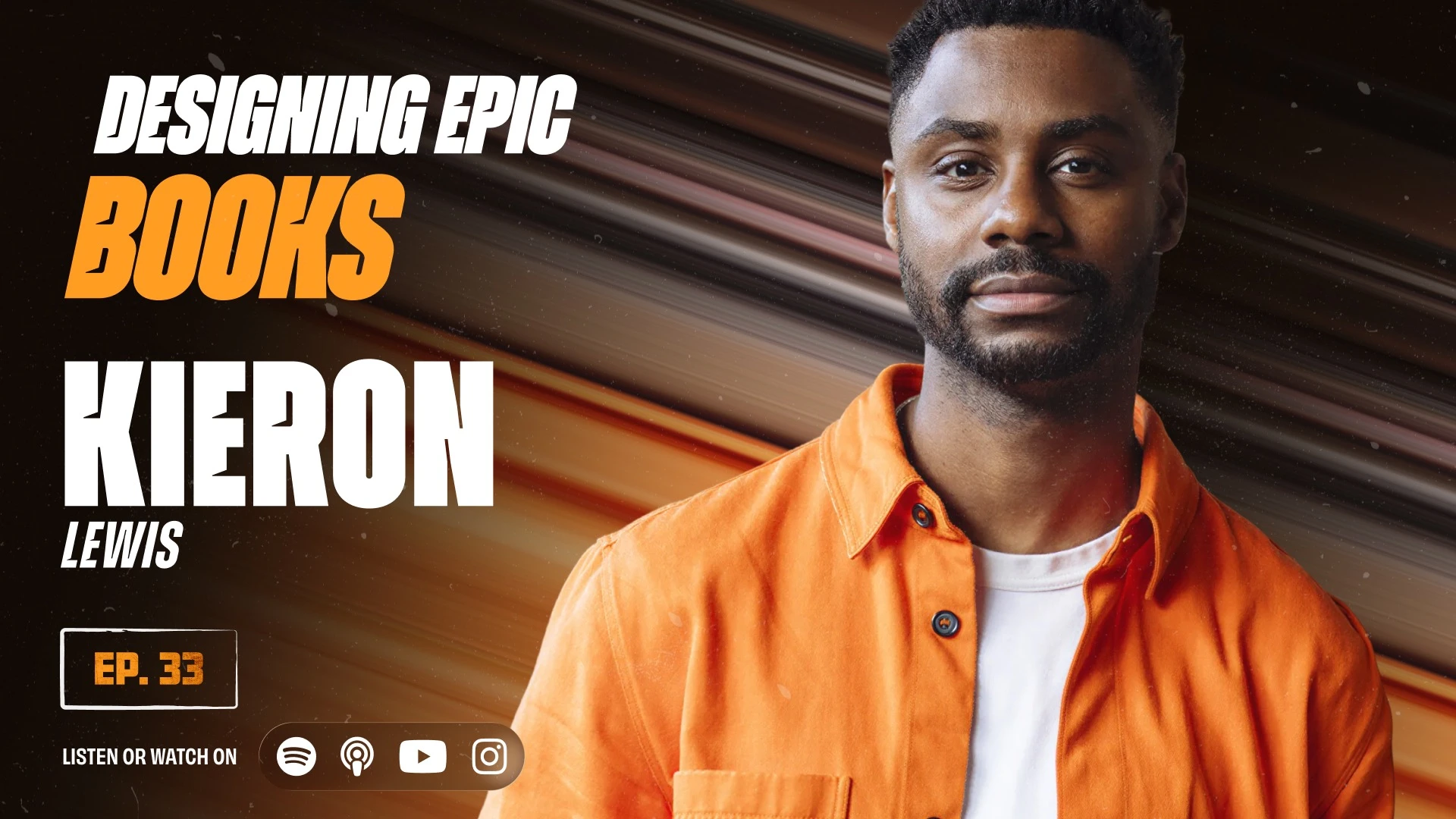
Kieron Anthony Lewis · 1:07:59